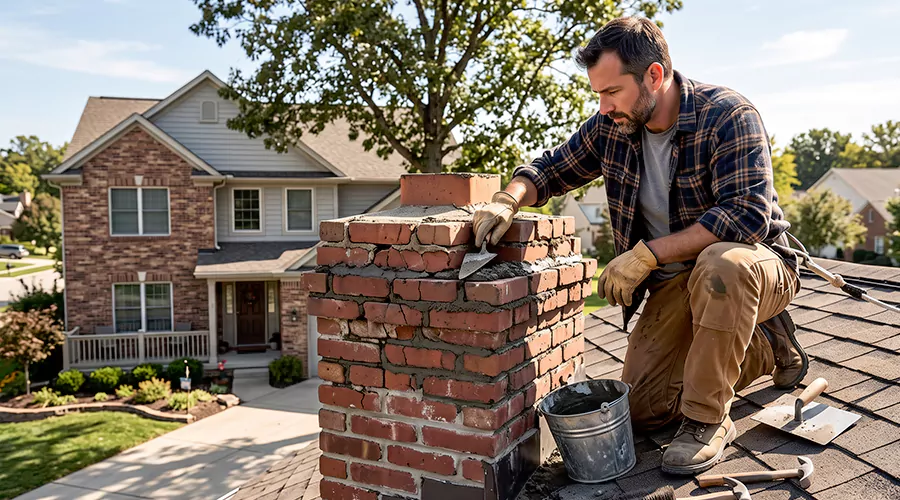
How to Repair Damaged Chimney Masonry
Damaged chimney masonry starts with cracked mortar and crumbling bricks. Repointing and brick replacement restore the structure before waterproofing is applied.




Based on 500+ Reviews

Proudly American
Owned & Operated

Damaged chimney masonry is a common problem that can affect the strength, appearance, and weather resistance of a chimney. Over time, exposure to rain, snow, temperature changes, moisture, and freeze-thaw cycles can weaken bricks and mortar joints. Repairing damaged chimney masonry involves identifying the type and extent of damage, removing deteriorated materials, restoring damaged areas, and protecting the chimney from future moisture problems.
Small masonry issues should not be ignored because cracks and deteriorating mortar can allow water to enter deeper into the chimney structure and lead to more extensive repairs.
Chimney masonry refers to the brick, stone, mortar, and other materials that form the exterior structure of a chimney.
The main masonry components include:
These materials protect the chimney from weather exposure while supporting the structure. Over time, masonry can deteriorate because of moisture, aging, and environmental conditions.
Several factors can contribute to chimney masonry damage.
Common causes include:
Understanding the cause of damage is important because repairs should address both the visible problem and the reason it developed.
Homeowners should look for warning signs that indicate masonry damage.
Common signs include:
Early repairs can prevent minor masonry problems from becoming larger structural issues.
Before making repairs, the chimney should be carefully inspected.
The inspection should identify:
Residential chimney services can provide a thorough evaluation. The type of damage determines the correct repair method.
For example:
Before repairs begin, damaged materials must be removed.
This may include:
Removing weak materials creates a stronger base for repairs.
Damaged areas should be removed carefully to avoid affecting surrounding masonry.
Mortar joints are one of the most common areas requiring chimney repairs.
Over time, mortar can deteriorate because of:
The repair process is known as repointing.
Repointing involves:
Proper repointing helps restore the connection between bricks and reduces water entry.
Individual bricks that are cracked, broken, or severely deteriorated may need replacement.
Brick replacement typically involves:
Replacing damaged bricks helps restore the appearance and strength of the chimney. If the fireplace surround is also affected, fireplace refacing can restore its look.
Small cracks in chimney masonry can allow moisture to enter.
Common repair methods include:
The repair method depends on:
Large or spreading cracks may indicate more serious problems.
Spalling occurs when the outer surface of bricks begins to break, flake, or fall away.
It usually happens because:
Repair options include:
Simply covering spalling bricks may not solve the underlying moisture problem.
Water is one of the biggest causes of chimney masonry damage.
Before completing repairs, check:
If the source of moisture is not corrected, repaired masonry may become damaged again. Persistent moisture can also cause odors, making fireplace smell removal necessary.
After masonry repairs are completed, waterproofing may help protect the chimney from future moisture absorption.
A proper chimney waterproofing product can:
Waterproofing should allow moisture vapor to escape while reducing water penetration.
| Type of Damage | Common Repair |
|---|---|
| Cracked mortar joints | Repointing |
| Broken bricks | Brick replacement |
| Surface deterioration | Masonry restoration |
| Water absorption | Waterproofing |
| Small cracks | Masonry repair |
| Severe damage | Partial rebuilding |
The correct repair depends on the severity of the problem.
Some minor masonry repairs may seem manageable, but chimney repair requires proper materials and techniques.
DIY repairs can be challenging because of:
Professional evaluation may be recommended when:
The cost of chimney masonry repair depends on:
Common cost factors include:
| Repair Type | Cost Factors |
|---|---|
| Mortar repair | Amount of repointing required |
| Brick replacement | Number of damaged bricks |
| Crack repair | Size and location of cracks |
| Masonry restoration | Extent of deterioration |
| Rebuilding | Structural damage level |
Repairing small problems early is usually less expensive than major restoration.
Preventive maintenance helps extend the life of chimney masonry.
Helpful steps include:
Regular maintenance reduces the chance of extensive masonry deterioration.
Masonry repairs should be considered when you notice:
Waiting too long can allow moisture to spread and increase repair requirements.
Repairing damaged chimney masonry involves identifying the source of damage, removing deteriorated materials, restoring bricks and mortar, and protecting the chimney from future moisture problems. Common repairs include repointing mortar joints, replacing damaged bricks, repairing cracks, fixing spalling, and applying waterproofing protection.
Because chimney masonry plays an important role in protecting the structure from weather exposure, early repairs can help prevent larger problems and extend the life of the chimney system.
Common causes include moisture, freeze-thaw cycles, cracked mortar, aging materials, and weather exposure.
Yes. Damaged bricks can often be repaired or replaced depending on the severity of the damage.
Chimney repointing is the process of removing damaged mortar joints and replacing them with new mortar.
Signs include cracked bricks, missing mortar, water leaks, spalling, and loose masonry.
No. Waterproofing protects masonry from moisture but does not repair damaged bricks or mortar.
Yes. Early repairs help prevent water intrusion and more extensive structural damage.
Damaged chimney masonry starts with cracked mortar and crumbling bricks. Repointing and brick replacement restore the structure before waterproofing is applied.
